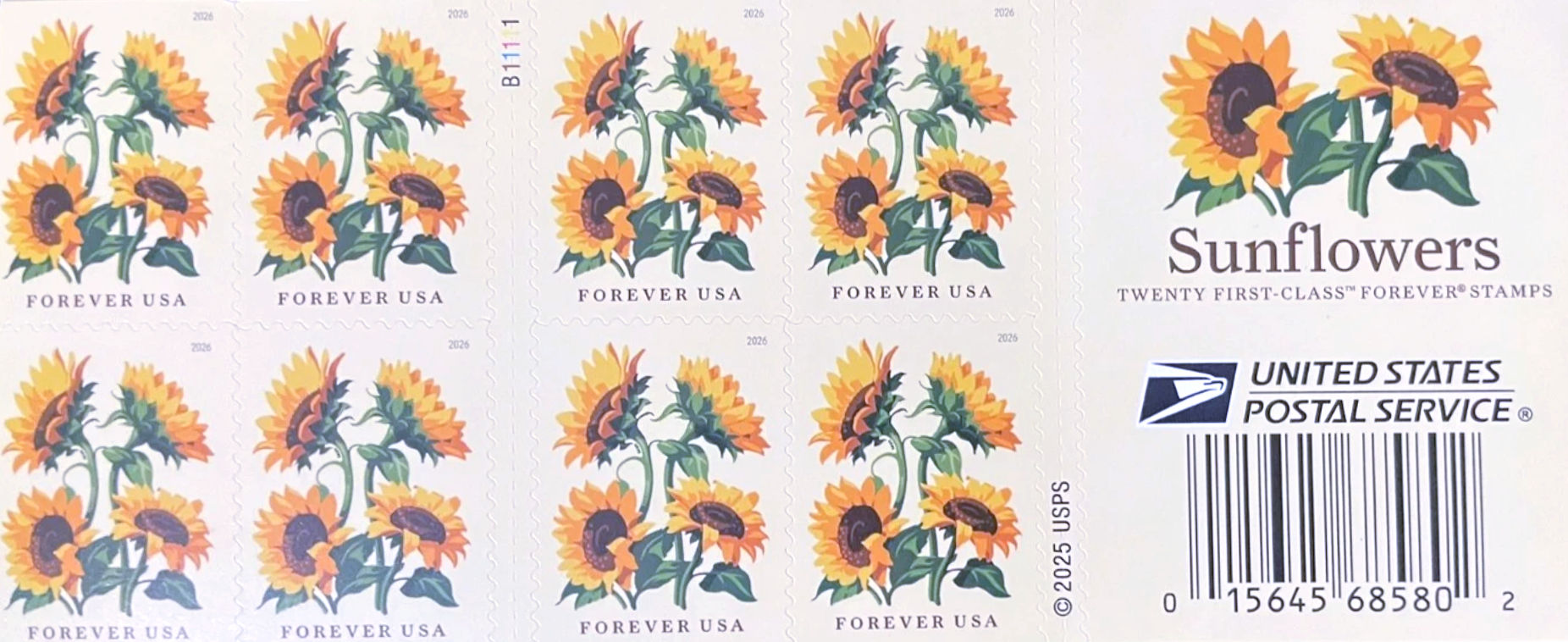
2026 Sunflowers Stamps Booklet of 20 - Forever - MNH
With the 2026 Sunflowers stamp, the U.S. Postal Service celebrates a versatile native flower recognized for its beauty, nutritional benefits, economic significance, and ecological contributions.
Prized by both gardeners and pollinators, the sunflower (Helianthus annuus) takes its scientific name from the Greek word helios, meaning “sun,” and anthus, meaning “flower.” Aside from common sunflowers, more than 50 distinct species of annual and perennial sunflowers grow within North America. Similar to other heliotropic plants like the alpine buttercup and Arctic poppy, young sunflowers follow the sun’s trajectory from east to west throughout the day. This sun-tracking behavior diminishes as the plant matures, and its stem becomes more stationary and rigid.
A dependable source of nectar and seeds, sunflowers are a favorite food plant for birds, bees, and butterflies. They also offer sustainable benefits including drought resistance, soil rejuvenation through their deep taproots, and natural pest control in gardens and on farms. While sunflowers are hardy, easy to grow, and tolerate both dry conditions and poor soil, true to their name, they do require plenty of sunshine.
Designed by art director Greg Breeding, the Sunflowers stamp continues a long tradition of highlighting native flowers on USPS stamps. In addition to sunflower stamps in 2008 and 2012, past native wildflower issuances include the 1992 American Wildflowers pane, Wild Orchids (2020), and Mountain Flora (2022), among many others.